Written by Joe Sandham, Director
UK farms have been suffering for years. Droughts, unpredictable weather and increasing costs continue to put pressure on harvests and profitability. But there’s one thing farms have that many other businesses don’t: vast amounts of unused space.
This is where solar panels for farms can provide a valuable opportunity. From large, unused rooftops to spacious ground-mounted systems, there are multiple ways farms can use solar. These systems can generate renewable energy, reduce electricity costs and potentially provide additional income by exporting surplus energy to the grid.
In this guide, we’ll look at the different types of solar panels for farms, how they can benefit agricultural businesses, the average costs involved, what you need to consider before installing them, and some examples of farms we’ve worked with.
What Are the Benefits of Solar Panels for Farms?
Firstly, we take a look at the financial benefits:
-
Lower energy costs
Solar panels generate electricity on-site, reducing how much energy farms need to buy from the grid. This can be particularly valuable for energy-intensive operations such as irrigation, refrigeration, milking parlours and poultry housing.
One poultry farm we’ve been working with has reduced its energy costs by 40%.
-
Greater protection from energy prices
Energy prices can be unpredictable, making it difficult to manage rising operating costs. Generating your own electricity gives you greater control over your energy costs and reduces your reliance on fluctuating grid prices.
-
Strong long-term return
Many commercial agricultural solar systems can achieve payback within 3–5 years. Solar panels can then continue generating electricity for 25 years or more.
-
Make use of unused space
Large farm buildings often have significant areas of unused roof space. Solar allows you to turn these spaces into productive assets, generating electricity for your operations and, where appropriate, providing an opportunity to export surplus energy.
Next, there are the operational benefits:
-
Generate energy when you need it
Many farms have high daytime electricity demand, from milking parlours and poultry ventilation to refrigeration and irrigation. Solar generates most of its electricity during daylight hours, meaning farms can use more of the energy they generate directly on-site.
Battery storage can then help store surplus energy for use when solar generation falls.
Finally, there are the environmental benefits:
-
Reduce your carbon footprint
Generating renewable electricity on-site can reduce your reliance on grid electricity and lower the carbon emissions associated with your farm’s energy use. It can also support wider sustainability and ESG targets without taking productive agricultural land out of use when rooftop space is utilised.
Where Can Solar Panels Be Installed on Farms?
There are two main options for installing solar panels on farms: rooftop and ground-mounted systems.
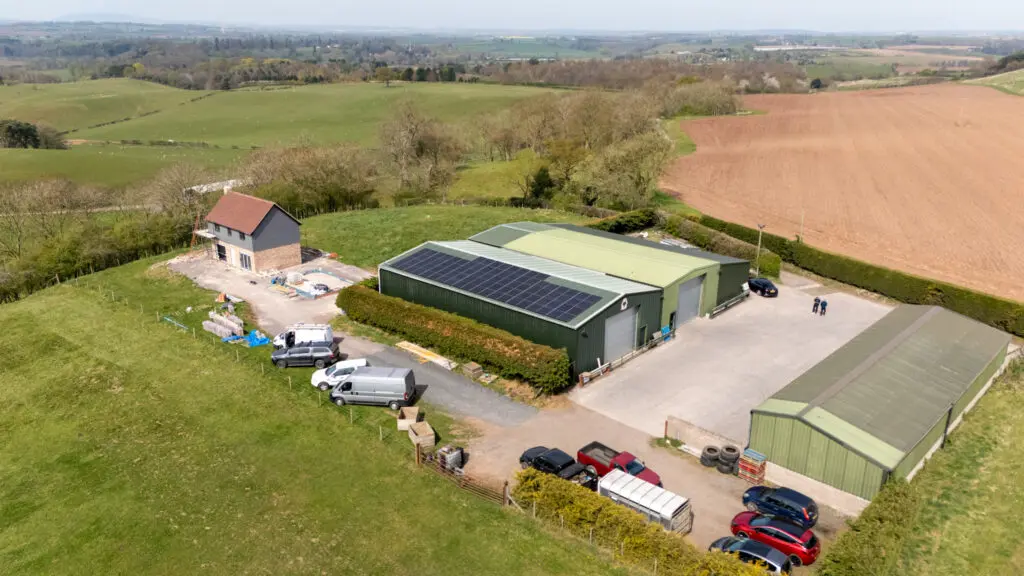
Rooftop solar is often the simplest option, making use of large, unshaded surfaces across barns, grain stores, dairy parlours and poultry sheds. It also allows farms to generate electricity close to where it is being used, helping to maximise on-site consumption during the day.
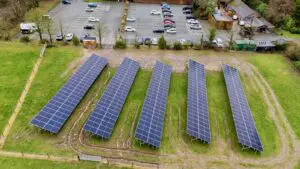
Ground-mounted solar can be an alternative where suitable roof space isn’t available. Unused or low-grade land can be used for solar generation, with systems designed around existing farm operations, access routes and, where appropriate, livestock or crops.
The right option will depend on your buildings, available space, energy usage and the practical requirements of your farm.
Are Farm Buildings Suitable for Solar Panels?
Many agricultural buildings can provide excellent opportunities for solar, but the suitability of a roof needs to be assessed before installation.
The size and orientation of the roof, shading, roof condition and structural capacity can all affect the design of a solar system.
It is also important to consider the age and condition of the building. If a roof is likely to need replacing in the near future, it may make sense to address this before installing solar panels.
Some older agricultural buildings may also contain asbestos or other materials that require additional consideration. A proper site assessment can identify these issues before a project progresses.
How Much Do Solar Panels for Farms Cost?
In 2026, installing solar panels on a UK farm typically costs around £600–£900 per kWp, although grants and available tax allowances can significantly reduce the overall investment.
For example, a typical 100kWp farm solar system could cost around £60,000–£75,000 before incentives. Potential annual energy savings could be around £21,500, depending on usage and system design.
This could mean a payback period of around 3–4 years in a suitable application, although the actual return will depend on factors such as electricity prices, how much solar energy is used on-site, system size, generation and any surplus electricity exported to the grid.
Solar panels can continue generating electricity for 25 years or more, meaning there can be many years of energy savings after the initial investment has been recovered.
For farms looking to avoid the upfront investment altogether, a Solar Power Purchase Agreement (PPA) can provide another route to installing solar.
Under a PPA, Kembla funds, installs and maintains the solar system. The farm simply pays for the renewable electricity it uses, providing:
- No capital outlay
- Predictable energy costs
- No upfront installation risk
- Ongoing maintenance and support
This means farms can start generating and using renewable energy without having to fund the system themselves.
Are There Grants or Tax Benefits for Farm Solar Panels?
There are a number of ways that farmers may be able to reduce the overall cost of installing solar, depending on the project and their individual circumstances.
Agricultural businesses may be able to benefit from available grants, while tax allowances such as the 100% Annual Investment Allowance (AIA) can also help qualifying businesses offset the cost of eligible investments.
The level of support available can change. Eligibility will also depend on the farm, the equipment and the circumstances of the investment.
Can Farms Combine Solar Panels With Battery Storage?
Solar and battery storage can work particularly well together on farms.
Solar panels generate most of their electricity during daylight hours, but some farms have significant energy demand outside these periods. A battery can store surplus solar generation and make that electricity available later, helping to increase the amount of renewable energy used on-site.
Battery storage can also provide greater flexibility around how and when electricity is used, particularly for farms with changing energy demands throughout the day.
The right approach will depend on your electricity usage, solar generation and the way your farm operates, so battery storage should be considered as part of the wider system design rather than as a standalone addition.
Can Farms Sell Excess Solar Electricity Back to the Grid?
Where a solar system generates more electricity than the farm can use at a particular time, there may be an opportunity to export the surplus electricity to the grid.
However, the amount you can export will depend on the available grid connection and local network requirements.
For this reason, solar systems for farms should be designed around the farm’s actual electricity consumption wherever possible. Using more of the electricity generated on-site can provide greater value than relying on exporting surplus generation.
Do Farms Need Planning Permission for Solar Panels?
Listed buildings, conservation areas and other environmental considerations can introduce additional requirements.
Rooftop solar and ground-mounted systems can have different planning requirements, while factors such as the size of the installation, location, existing buildings and local planning restrictions may also need to be considered.
Listed buildings, conservation areas and other environmental considerations can introduce additional requirements.
Larger ground-mounted systems may also require more detailed planning and environmental assessments.
Planning and permissions should therefore be considered early in the process, rather than once the system has already been designed.
What Should You Consider Before Installing Solar?
Every farm is different. The right solar system needs to work around how your business operates.
There are several things to consider:
- Energy usage: How much electricity are you using, and when? This helps determine the right system size and how much energy you can use on-site.
- Roof space: Are your buildings structurally suitable, and which roofs offer the best opportunity for solar?
- Roof condition: Will the roof need maintenance or replacement before solar can be installed?
- Available land: If rooftop solar isn’t suitable, is there nearby land that could accommodate a ground-mounted system?
- Farm operations: Can the system work around machinery, livestock, access routes and other day-to-day activities?
- Battery storage: Could storing surplus solar generation help you make better use of the electricity your system produces?
- Grid connection: Is there enough grid capacity to connect the system and export surplus electricity where required?
- Planning and permissions: Are there any planning, environmental or other requirements that need to be addressed?
We Handle It All
You don’t need to work through all of this alone. At Kembla, we provide a complete turnkey service, from the initial site assessment through to design, planning, installation and aftercare.
We’ll assess your energy usage and available space, then design a system around your farm. We’ll calculate the potential savings and manage the necessary planning and legal requirements. From installation through to aftercare, we’ll provide ongoing support.
If you’re considering solar for your farm, you can find out more about our approach to agricultural solar and the solutions available for different types of farming businesses here.
Solar Panels for Farms: Our Projects
We’ve completed multiple installations across farms and agricultural settings. From large-scale potato farms and chicken farms to smaller-scale agricultural sites, we’ve installed systems designed around the needs of each business.
One particularly interesting project demonstrates the importance of taking a tailored approach to solar installations in agricultural settings.
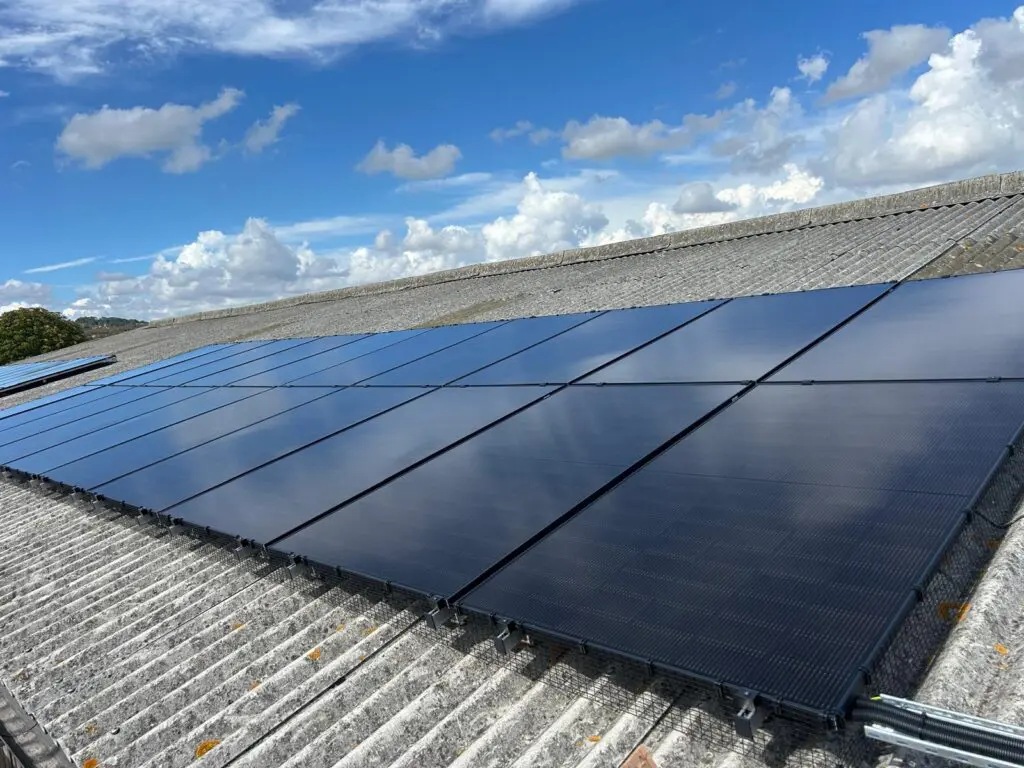
The project involved the installation of a 20.2kWp solar PV system comprising:
- 40 × DMEGC Solar 510W panels
- 2 × SolarEdge Multirange inverters
- 40 × SolarEdge optimisers
- 4 × SolarEdge 10kWh batteries
The system is expected to generate 21.85MWh of usable solar energy each year, saving an estimated 4.22 tonnes of CO₂ emissions annually, equivalent to planting around 194 trees.
What made this project particularly challenging was the building’s fibre cement roof. Not every agricultural roof is suitable for solar, so the installation required careful consideration and specialist design to ensure the system could be installed safely and effectively.
It’s a good example of why a one-size-fits-all approach doesn’t work when it comes to farm solar. Every building, roof and energy requirement is different, and the right solution needs to be designed around the site.
Projects like this demonstrate the experience and flexibility needed to deliver solar across a wide range of farming and agricultural environments.
Get Started With Solar for Your Farm
If you’re considering solar panels for your farm, the first step is understanding what your site could achieve.
Please get in touch with us here or speak with our team today on:
Midlands: 01543 713026
South: 0239 4005478
Start Your Journey to Renewbles Today
Our mission is to lower your carbon footprint through a pain-free experience.
Get a quote

Solar Battery Storage: Complete UK Guide 2026
Written by Daniel McMurray, Sales Manager Solar battery storage is essential for...
Commercial EPC Regulations for UK Landlords
Written by Billy Robertson, Commercial Manager Commercial EPC regulations are changing, and...
School Capital Funding 2026-27: A Guide for Schools
Written by Declan Adams, Managing Director School capital funding for 2026-27 has...
Commercial Solar Panels Staffordshire | Funding Guide 2026
Written by Billy Robertson, Commercial Manager Solar panels are helping Staffordshire businesses...