Written by Declan Adams, Managing Director
Solar panel fire safety is something we’re asked about a lot. And it’s a fair question. When you install an electrical system on your roof, you naturally want to understand the risks. What could cause a fire, and what measures can help prevent one?
The good news is that solar PV systems are designed with safety in mind. When installers design, install and maintain a system correctly, they can significantly reduce the risk of electrical faults and fire.
In this blog, we explain what causes solar panel fires, how to reduce the risk and what homeowners, businesses and schools need to consider.
Are solar panels a fire risk?
Solar panel fires remain relatively uncommon compared with the number of installations across the UK. However, recent research highlights why installation quality and maintenance matter.
In April 2026, QBE, an international insurance group, published research using data obtained through Freedom of Information requests to UK Fire and Rescue Services. The research recorded an increase in reported fires involving solar panels between 2022 and 2025. Over the same period, the number of solar PV installations also grew.
| 2022 | 2023 | 2024 | 2025 | |
| Reported fires involving solar panels* | 91 | 131 (+44%) | 155 (+18%) | 212 (+37%) |
| Total UK solar PV installations** | 1,268,795 | 1,467,806 (+16%) | 1,663,904 (+13%) | 1,933,148 (+16%) |
Over this four-year period, reported fires increased by 133%, while the number of installations grew by 52%. These figures don’t explain the cause of every incident. However, they highlight the importance of getting system design, installation and maintenance right.
QBE also broke down the 2025 incidents by component and building type. Its published figures included:
| Classification | Category | Incidents |
| Component | DC cabling and connectors | 49 |
| Component | Solar panels themselves | 36 |
| Component | Battery banks | 23 |
| Component | Inverters | 19 |
| Location | Residential buildings | 102 |
| Location | Commercial properties | 48 |
| Location | Industrial buildings | 14 |
The component figures account for 127 incidents, rather than all 212 reported fires. They therefore represent incidents where a component was identified. The location figures provide a separate breakdown.
DC cabling and connectors formed the largest recorded component category. This highlights the importance of using suitable components and making secure electrical connections. Installers also need to complete all work correctly.
At Kembla, we can help manage these risks through proper system design, professional installation and appropriate inspection and maintenance.
Ultimately, the takeaway isn’t that solar panels are inherently unsafe. Instead, as installations become more widespread, we need to pay close attention to installation quality and the ongoing condition of each system.
Sources: QBE’s solar panel fire research and UK Government solar PV deployment statistics.
With more solar installers entering the market, it’s worth checking a company’s certifications and consumer protections before committing to an installation. For domestic installations, look for an MCS-certified installer and check which consumer protection arrangements apply.
A reputable installer should also carry out a thorough site survey and design the system around your building. This includes checking that the panels, inverters, optimisers and any battery storage work together correctly. At Kembla, we follow this approach for every installation.
What causes solar panel fires?
Several issues can increase the risk of a solar panel fire. Let’s look at the main causes and what installers need to consider.
Poor installation
The issue isn’t necessarily the panels themselves. Electrical connections and wiring can also create risks.
For example, loose connections, poorly installed cables and incompatible connectors can cause electrical arcing. This generates heat and can potentially lead to a fire.
That’s why correct installation and secure electrical connections are essential.
Inverter failure
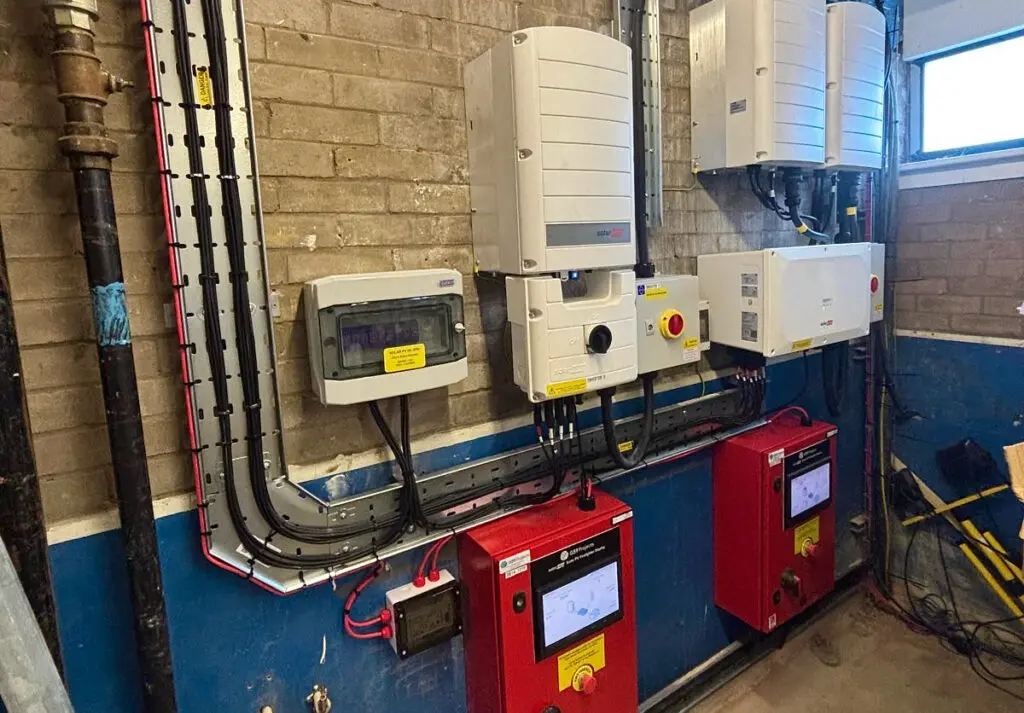
Inverters play a key role in a solar installation. They convert the direct current (DC) electricity generated by solar panels into alternating current (AC) electricity that your home or building can use.
However, faults and damaged components can cause problems. Poor installation conditions can also contribute to overheating. For this reason, installers must position and install inverters correctly, following the manufacturer’s guidance.
Faulty components
Poor-quality, defective or incorrectly installed electrical components can introduce additional risks. These include DC isolators, connectors and junction boxes.
To reduce the likelihood of faults, installers should use suitable, certified equipment and follow the correct installation procedures.
Battery storage
Battery storage introduces additional fire-safety considerations. Installers must choose a suitable location and follow the manufacturer’s instructions and the system’s design requirements.
Lofts and roof spaces should generally be avoided for battery storage. Temperature extremes and restricted access can create additional concerns. Installers must also consider ventilation requirements, proximity to escape routes and the potential consequences of a battery fault.
Now that we’ve covered the main causes, let’s look at how you can reduce solar panel fire risk.
How is solar panel fire risk reduced?
Whether you’re a homeowner, business owner or responsible for a school, choosing a competent solar installer is one of the most important steps you can take.
For domestic installations, look for the relevant MCS certification. You should also check which consumer protections apply, rather than relying on a company’s claims alone.
Next, consider the equipment. Every component, from the panels and optimisers to the inverter and any battery storage, must suit the system. Installers should also follow the manufacturer’s instructions and relevant standards.
The technology itself matters, too. Different solar and battery systems offer different safety, monitoring and protection features. Your installer should explain how the proposed system manages electrical risks and what safeguards it includes.
Battery placement is another important consideration. A competent installer will recommend a location that suits the battery, the building and the manufacturer’s requirements. If you’re considering storage, explore Kembla’s battery storage solutions.
Finally, don’t overlook ongoing maintenance. Operations and maintenance (O&M) play an important role long after the original installation.
Regular monitoring, inspections and servicing can help identify potential problems. The right schedule will depend on the manufacturer’s guidance, the system design and the requirements of the site. If you spot a fault or damage, arrange for a suitably qualified professional to investigate it.
Find out more about Kembla’s maintenance and aftercare services.
For homeowners
For homeowners, the priorities are straightforward. Choose a reputable installer, make sure the equipment suits your property and understand how to monitor and maintain your system.
If you plan to add battery storage, consider its location carefully. Your installer should explain the options and recommend a suitable position.
For businesses
Commercial installations often involve larger rooftop systems and more complex electrical layouts. As a result, businesses need to consider roof access, maintenance and emergency planning during the design stage.
They should also account for the building’s existing fire-safety arrangements.
At Kembla, we provide commercial solar solutions that reflect the needs of different businesses, buildings and energy-use profiles.
For schools
Schools must consider the safety of pupils, staff and visitors. They also need to account for their existing fire-safety procedures.
During planning, installers should consider roof access, electrical isolation, maintenance and emergency arrangements. These measures should form part of the wider installation plan.
Kembla has extensive experience delivering solar installations for schools and academy trusts. We plan each project around the requirements of the individual site.
What does this mean for your solar installation?
Solar panels shouldn’t be viewed as an automatic fire hazard simply because they generate electricity on a roof. As with any electrical system, the key is to understand the risks and take the right precautions from the outset.
First, a site survey helps establish the building’s requirements. The installer can then design a suitable system, select quality components and complete the installation correctly. Ongoing maintenance helps keep the system in good condition.
For businesses and schools, the process also needs to account for building layout, roof access and existing fire-safety arrangements.
At Kembla, we consider these factors when designing and installing solar PV systems. Every building is different, so we look at its electrical requirements and how the system will operate before recommending a solution.
If you’re considering solar for your home, business or school, our team can explain the options and the safety considerations relevant to your building.
Solar panel fire safety: our projects
At Kembla, we consider safety throughout the design and installation process. We select solar and battery equipment according to the requirements of each project.
Depending on the system configuration, this may include electrical protection, system monitoring and suitable isolation arrangements. Some equipment can also identify or respond to potential faults.
However, technology alone isn’t enough. Correct system design, quality components, professional installation and regular maintenance all help reduce solar panel fire risk.
Every building has different requirements. That’s why we consider the property, its electrical needs and how the system will operate before planning an installation.
Whether we’re installing solar panels on a family home, a commercial rooftop or a school, our approach remains the same: get the design right, use appropriate equipment and consider safety at every stage.
Solar panel fire safety FAQs
Are solar panels a fire risk?
Solar panels carry a low fire risk when part of a properly designed, installed and maintained system. However, electrical faults, damaged components and poor installation can create hazards. Choosing a competent installer and maintaining your system helps reduce these risks.
What causes solar panel fires?
Solar panel fires can result from faulty components, loose electrical connections, damaged cables, electrical arcing or installation defects. Poor maintenance can also allow faults to go unnoticed. Regular inspections and monitoring can help identify potential problems.
How can you reduce solar panel fire risk?
Start by choosing a qualified installer and ensuring the system has a suitable design. Use compatible components and make sure the installer follows the correct procedures. Ongoing monitoring, appropriate electrical protection and regular maintenance can also help reduce the risk of fire.
Are solar panels safe for schools?
Schools can install solar panels safely when installers design and fit the system correctly, taking the building and its occupants into account. They should also consider roof access, electrical isolation, maintenance and emergency procedures alongside existing fire-safety arrangements.
Find out more about our solar panels for schools.
Are solar batteries a fire risk?
Battery storage introduces additional fire-safety considerations. Choose suitable equipment, use an appropriate location and follow the manufacturer’s instructions.
Lofts and roof spaces should generally be avoided for battery storage. Instead, the installer should recommend a suitable location based on the battery manufacturer’s requirements, the building and the need for safe access in an emergency.
You can find out more about Kembla’s battery storage solutions.
Do solar panels affect a building’s fire risk assessment?
Solar PV installations can introduce additional considerations, including electrical hazards, roof access and emergency response.
For businesses and schools, the responsible person should consider these factors as part of the building’s wider fire-safety arrangements. They may also need appropriate advice on whether the existing fire risk assessment requires an update.
Can firefighters safely work around solar panels?
Firefighters can respond to incidents involving solar PV, but the panels introduce additional electrical hazards. They may continue generating electricity when exposed to light.
For this reason, installers and building operators should consider system layout, isolation arrangements, labelling and access information. These details can help emergency responders understand the installation and manage the associated risks.
Planning a Solar Installation?
Thinking about installing solar panels at your home, business or school? At Kembla, we take the time to understand your building, energy requirements and installation considerations before recommending a solution.
Get in touch with our team to discuss your project.
Midlands: 01543 713026
South: 02394 005478

Start Your Journey to Renewbles Today
Our mission is to lower your carbon footprint through a pain-free experience.
Get a quote

Solar Panels for Farms: Costs, Benefits & What to Consider
Written by Joe Sandham, Director UK farms have been suffering for years....
Solar Battery Storage: Complete UK Guide 2026
Written by Daniel McMurray, Sales Manager Solar battery storage is essential for...
Commercial EPC Regulations for UK Landlords
Written by Billy Robertson, Commercial Manager Commercial EPC regulations are changing, and...
School Capital Funding 2026-27: A Guide for Schools
Written by Declan Adams, Managing Director School capital funding for 2026-27 has...