Written by Declan Adams, Managing Director
School capital funding for 2026-27 has now been announced, with record investment being made to help schools maintain buildings, improve facilities and address long-term estate priorities.
The Department for Education has announced over £2.1 billion in capital funding for the 2026-27 financial year, providing schools and academy trusts with valuable opportunities to invest in their estates.
While much of the funding will be used for essential maintenance and repairs, it also presents an opportunity for schools to align capital investment with their climate action strategy and wider public sector sustainability and carbon reduction objectives. For many schools, renewable energy projects and energy efficiency improvements remain on the wish list due to budget constraints. However, with capital funding now available, schools have an opportunity to make meaningful progress against their Climate Action Plans while reducing long-term energy costs.
What is School Capital Funding for 2026-27?
School capital funding is allocated by the Department for Education to support the maintenance, improvement and condition of school buildings across England.
The funding is designed to help schools address building condition issues, replace ageing infrastructure and ensure learning environments remain safe, efficient and fit for purpose.
Depending on eligibility criteria and allocation routes, schools can use capital funding for projects including:
- Roof replacements
- Heating system upgrades
- Electrical improvements
- Building fabric repairs
- Energy efficiency measures, which might include renewable energy installations
While many schools understandably focus on urgent maintenance requirements, capital funding can also provide an opportunity to future-proof estates and reduce ongoing operational costs.
Which Schools Are Eligible?
Eligibility will depend on the funding stream and individual circumstances of schools and academy trusts.
Typically, capital funding supports:
- Local authority maintained schools
- Multi-Academy Trusts (MATs)
- Single academy trusts
- Special schools
- Alternative provision settings
All schools should review the latest Department for Education guidance to understand their eligibility and funding allocations.
Why This Matters for School Sustainability Plans
Schools are facing increasing pressure to reduce energy consumption, lower carbon emissions and support the government’s wider Net Zero ambitions.
Every schools is required to maintain and make progress against a Climate Action Plan or sustainability strategies, identifying opportunities to improve energy efficiency and reduce environmental impact. The challenge is often finding the budget to deliver those projects.
At the same time, energy costs continue to place pressure on school budgets.
This is why the 2026-27 capital funding announcement is particularly significant.
Rather than viewing the allocation solely as a maintenance budget, schools can use capital funding strategically to invest in projects that deliver both environmental and financial benefits.
Projects that improve building performance today can help schools reduce energy costs for years to come while supporting wider sustainability commitments.
Capital Projects That Can Support Carbon Reduction
There are several ways schools can use capital funding to support their Climate Action Plans.
Solar PV Systems
Solar photovoltaic (PV) systems enable schools to generate their own electricity, reducing reliance on grid energy and dramatically lowering electricity bills. With many schools having large roof spaces, solar installations often present one of the most effective opportunities for long-term savings.
LED Lighting Upgrades
Replacing older lighting systems with LED technology can significantly reduce energy consumption while lowering maintenance requirements. LED upgrades are often considered one of the quickest and most cost-effective energy-saving improvements schools can make.
Heating System Improvements
Upgrading ageing heating systems and controls can improve efficiency and reduce energy costs. Schools may also consider low-carbon technologies such as air source heat pumps (ASHP) to support their Carbon Action Plans and wider decarbonisation objectives.
Building Fabric Improvements
Improved insulation, roofing and window upgrades can help reduce heat loss and improve overall building performance. These projects not only contribute to carbon reduction but can also improve comfort levels for staff and students.
Smart Energy Controls
Modern energy management systems allow schools to monitor and optimise energy usage, helping identify inefficiencies and reduce unnecessary consumption.
Looking Beyond Maintenance
Historically, school capital funding has often been viewed as a maintenance budget focused on repairing and replacing ageing infrastructure.
However, forward-thinking schools and multi academy trusts are increasingly taking a broader view.
Rather than simply replacing assets like-for-like, schools are using capital investment opportunities to improve energy performance, reduce operational costs and support long-term sustainability objectives.
When planned strategically, a capital project can achieve multiple outcomes:
- Address building condition issues
- Improve learning environments
- Reduce energy consumption
- Lower carbon emissions
- Deliver long-term financial savings
This approach helps schools maximise the value of every pound invested.
How Schools Can Identify the Best Opportunities
Before committing funding, schools should consider how proposed projects align with both estate priorities and sustainability goals.
A simple starting point is to ask:
- Will this project reduce energy consumption?
- Does it support our Carbon Action Plan?
- Can it lower operational costs?
- Will it improve building performance?
- Does it contribute towards long-term Net Zero objectives?
By considering these questions early, schools can ensure capital funding delivers the greatest possible impact.
Case Study: Thomas Telford Multi Academy Trust
A strong example of how schools can combine effective estates management with sustainability objectives can be seen through our ongoing partnership with Thomas Telford Multi Academy Trust.
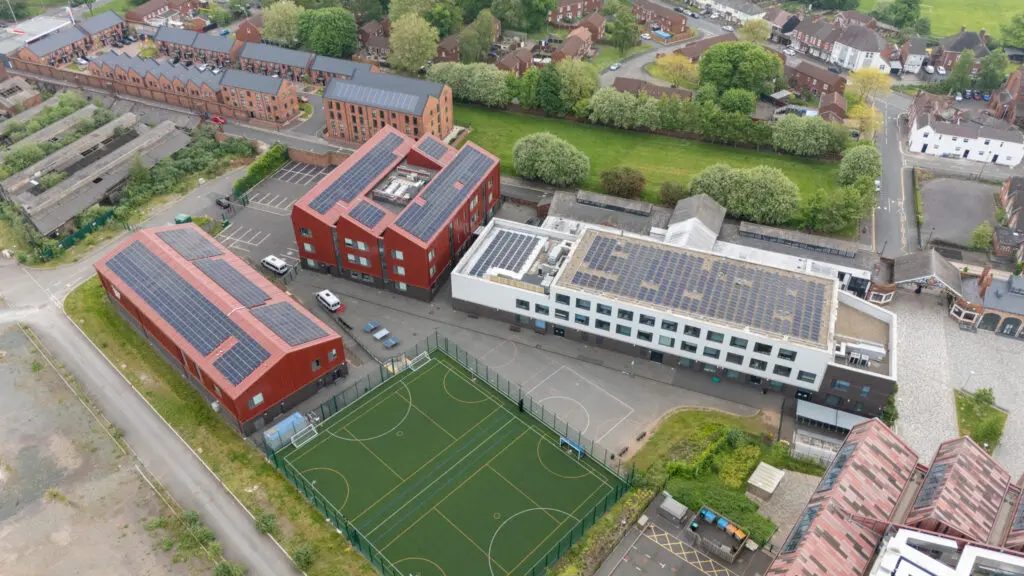
To date, we’ve delivered solar PV installations across six schools, helping the trust to substantially reduce its energy costs while making significant progress towards its carbon reduction goals. Collectively, these projects have delivered:
- 4,403 solar panels installed
- 3.43 GWh of clean energy generated
- 41,034 equivalent trees planted
- An average payback period of 5-7 years per school
Our work doesn’t stop there. In addition, we’ve delivered renewable energy projects for a further four schools and universities, bringing our total impact across the education sector to:
- 5,442 solar panels installed
- 3.86 GWh of clean energy generated
- 44,894 equivalent trees planted
- An average payback period of 5-7 years per school
We’re also currently planning and delivering projects for seven more schools, helping even more educational settings reduce their carbon footprint, lower energy costs and create more sustainable learning environments.
Final Thoughts
The 2026-27 school capital funding allocation provides more than an opportunity to maintain buildings and address condition issues.
It offers schools a practical route to improve energy efficiency, reduce operational costs and make meaningful progress towards their carbon reduction goals.
As schools continue to balance financial pressures with sustainability commitments, strategic investment in renewable energy and energy efficiency projects can help deliver lasting benefits for both budgets and the environment.
By aligning capital funding decisions with Carbon Action Plans, schools can maximise the impact of every investment while creating more sustainable learning environments for future generations.
Reduce Your School’s Energy Costs Today
Our team would love to hear from you. Give us a call today on:
📍 Midlands: 01543 713026
📍 South: 02392 400547
Or click “Get a Quote” below to receive an instant estimate for your business.

Start Your Journey to Renewbles Today
Our mission is to lower your carbon footprint through a pain-free experience.
Get a quote

Solar Battery Storage: Complete UK Guide 2026
Written by Daniel McMurray, Sales Manager Solar battery storage is essential for...

Commercial EPC Regulations for UK Landlords
Written by Billy Robertson, Commercial Manager Commercial EPC regulations are changing, and...

Commercial Solar Panels Staffordshire | Funding Guide 2026
Written by Billy Robertson, Commercial Manager Solar panels are helping Staffordshire businesses...
Commercial Solar Panels Stafford | Brucom Case Study
Written by Declan Adams, Managing Director For businesses considering commercial solar panels...