
Written by Joe Sandham, Director
Solar carports and solar canopies are rapidly gaining momentum in the UK as organisations push harder toward clean energy, lower operating costs, and energy independence. Whether you’re just starting your renewable journey or scaling an existing setup, these structures are one of the smartest ways to unlock new solar capacity and get more out of your site.
In this blog, we cover:
- What a solar carport and solar canopy is
- Why they’re so valuable to businesses
- How to choose the right system
- Planning permission essentials
- Solar carports vs rooftop solar
- Typical installation costs
- A real-world case study
Let’s get into it.
What Is a Solar Carport and Solar Canopy?
A solar carport is a steel or aluminium structure installed above car parking spaces. It provides shade and protection for vehicles while supporting solar panels on the roof. The generated electricity can feed directly into EV charging stations or your main electrical system.
A solar canopy is essentially the same concept but installed in non-parking areas – such as playgrounds, bike shelters, walkways, outdoor seating, or fields. In short: anywhere you’ve got space and sunshine, a solar canopy can go to work.
Both options transform underused land into productive clean-energy infrastructure.
Why Are Solar Carports and Canopies So Beneficial for Businesses?
Two words: underused space. But the upsides run much deeper. Here are six high-impact benefits:
- Energy Cost Savings
More solar surface area = more energy generated. This reduces grid reliance, trims monthly bills, and enables you to export excess energy back to the grid through schemes like Smart Export Guarantee.
- Space Optimisation
Rooftops often limit how many panels you can install due to orientation, shading, or structural constraints. Carports and canopies unlock brand-new real estate for solar generation.
- Built-In EV Charging Infrastructure
Solar carports are the ideal companion for workplace EV charging. Staff or fleet vehicles can charge throughout the day using low-cost, clean energy – no separate charging facility required.
- Faster Return on Investment
The additional generation capacity accelerates payback periods. Plus, covered parking and improved site infrastructure typically boost property value and rental appeal.
- Stronger ESG & Increased Compliance
A solar installation instantly strengthens your sustainability credentials – a huge plus for clients, investors, and upcoming regulatory pressures. It also helps you achieve (or maintain) an EPC rating of C or above for leased properties.
- Better Customer & Staff Experience
Protection from rain, snow, and strong sun makes parking more comfortable year-round. Vehicles stay cooler in summer and cleaner in winter.
How to Choose the Right Solar Carport or Solar Canopy
Before committing to a system, here’s what you should be looking at:
- Structure Materials
Steel is ideal for large, heavy-duty commercial installations. Aluminium offers a sleek finish and excellent corrosion resistance.
- Energy Targets
If maximum generation is the priority, choose a design that optimises panel tilt and orientation – even when your car park isn’t positioned perfectly south.
- EV Charging Plans
Even if you’re not ready to install chargers today, futureproof with built-in cable management and space for expansion. EV demand is only going one direction.
- Drainage & Weather Protection
Choose a system that manages water correctly and withstands UK weather conditions – especially wind and uplift forces.
- Aesthetics & Site Integration
A well-designed carport or canopy instantly upgrades your site’s look and feel – an underrated win for brand perception.
Planning Permission & Regulations: What to Expect
Unlike rooftop solar, solar carports and canopies typically require planning permission, as they are new, standalone structures.
What Planners Usually Want
- Structure height and overall footprint
- Visual impact submissions (especially near public-facing areas)
- Groundworks and drainage details
- Safety and structural integrity reports (wind/snow loading)
- EV charging and cable-routing plans (if included)
The good news? Solar installations align with local authority sustainability goals, so applications are usually well-received when presented professionally.
We can assist with early feasibility and surveys.
Solar Carports vs Rooftop Solar: Which Is Better?
They’re not competitors – they’re complementary tools.
Rooftop Solar Pros
- Lower upfront cost
- Fast installation
- Uses existing surfaces
Rooftop Limitations
- Roof might be too old, too weak, or poorly oriented
- Limited surface area
- Maintenance access can be tricky
Solar Carports & Canopies Pros
- Add brand-new solar capacity
- Enable EV charging
- Improve site usability
- Offer long-term infrastructure value
When Carports Win
If you want maximum generation, visible sustainability impact, and EV readiness – carports and canopies are the strategic choice.
The Gold Standard
Many businesses start with rooftop solar, then add carports later to scale their system and meet growing energy needs.
What Does a Solar Carport or Solar Canopy Cost?
Costs depend on the size of the structure, number of panels, groundworks, accessibility, cable length, and planning requirements.
Typical Commercial Costs
- £1,900 – £2,200 per kW
- £6,000 – £7,000 per parking space
These figures give a reliable ballpark. For an exact figure, a free site visit is the best next step.
Real-World Example: Solar Carport at Walsall Academy
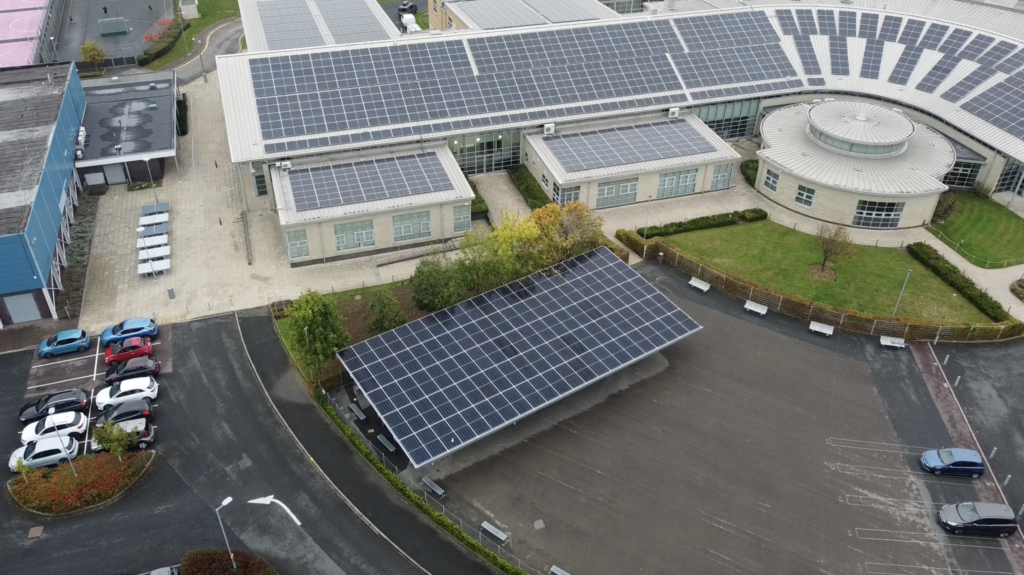
We recently installed a 71.5 kWp solar carport at Walsall Academy – bringing their total to 793 panels and generating an estimated 486 MWh annually.
That’s a substantial reduction in energy spend and a significant stride toward long-term sustainability targets.
Unlock the Value of Your Underused Space
If you’re looking to start your renewable energy journey or expand your existing infrastructure, our team is here to help. Speak with us today on:
📍 Midlands: 01543 713026
📍 South: 02392 400547
Or click “Get a Quote” to get an instant estimate for your business or home.
Start Your Journey to Renewbles Today
Our mission is to lower your carbon footprint through a pain-free experience.
Get a quote

Solar Panels for Farms: Costs, Benefits & What to Consider
Written by Joe Sandham, Director UK farms have been suffering for years....
Solar Battery Storage: Complete UK Guide 2026
Written by Daniel McMurray, Sales Manager Solar battery storage is essential for...

Commercial EPC Regulations for UK Landlords
Written by Billy Robertson, Commercial Manager Commercial EPC regulations are changing, and...
School Capital Funding 2026-27: A Guide for Schools
Written by Declan Adams, Managing Director School capital funding for 2026-27 has...