
Written by Billy Robertson, Commercial Manager
UK energy prices could be heading for another sharp increase, potentially close to 20%. Not exactly the kind of headline anyone wants with their morning coffee, but the reality is that rising geopolitical tensions in the Middle East are already putting pressure on global energy markets.
As the situation involving Iran develops, the global supply chain is tightening. Oil prices have reacted almost instantly, and that ripple effect is now being felt across manufacturing, transportation, food production, and everyday consumer goods.
While UK household bills may feel relatively steady right now, the next energy price cap update from Ofgem, due on 27th May, is expected to push costs up once again.
In this blog, we’ll break down:
- Why energy prices are rising
- What experts are predicting next
- And most importantly, how you can protect yourself from future increases
Why Are UK Energy Prices Rising Again?
If it feels like energy price increases have become the norm, you’re not wrong.
The latest spike is being driven by instability in the Middle East, particularly involving Iran. This region plays a critical role in global oil and gas supply, so even the threat of disruption can send prices climbing.
As oil prices increase, the knock-on effect spreads quickly:
- Higher fuel costs = more expensive transport
- Increased production costs = pricier goods
- Supply chain pressure = inflation across sectors
In short: energy is at the heart of everything, so when it moves, everything else follows.
What Are the Predictions?
Forecasts are already starting to come in and they’re not particularly reassuring.
Energy analysts at Cornwall Insight suggest that UK energy bills could rise by around 20% once the next price cap is announced. While this isn’t expected to reach the extreme spikes seen during the Russian invasion of Ukraine, it still represents a significant increase.
To put things into perspective:
- Current energy rates are already around 14% higher than pre-2022 levels
- Any further increases compound an already elevated baseline
- The longer the Middle East situation continues, the greater the potential impact
So, while this may not be a repeat of 2022, it’s far from stable and volatility is the real issue here.
The Bigger Issue: Energy Volatility
Here’s the uncomfortable truth: it’s not just about this price rise.
It’s about ongoing uncertainty.
Global conflicts, supply chain disruptions, and market speculation mean energy prices are becoming increasingly unpredictable. That makes budgeting harder for households and even more challenging for businesses trying to control operating costs.
And relying entirely on the grid means you’re exposed to all of it.
How to Protect Yourself from Rising Energy Costs
Let’s cut to it, what can you actually do?
One word: Solar.
Yes, we know, it sounds like the obvious answer. But the numbers back it up.
- Lock in Your Energy Costs
With solar panels, you’re effectively fixing a large portion of your energy costs for 25+ years. No more riding the wave of global uncertainty.
- Strong Return on Investment
- Households typically see payback in 6–10 years
- Businesses can see returns in as little as 3–5 years
After that, it’s all savings:
- Up to £20,000+ saved for households
- Up to £100,000+ saved for businesses over 25 years
That’s not just cost-cutting, it’s a strategic investment.
- Battery Storage = Maximum Savings
Pairing solar with battery storage takes things up a level:
- Store excess energy for evening use
- Reduce reliance on the grid
- Cut energy bills by up to 80%
In some cases, you can even sell unused energy back – turning your system into a revenue generator.
Real-World Impact
This isn’t just theory.
Customers are already seeing the benefits – lower bills, greater independence, and protection from market swings. And with energy prices expected to remain volatile, those advantages are only becoming more valuable over time. Hear from two of our customers, one commercial and one residential, on how much they’re saving:
“Investing in sustainable energy like solar power helps us absorb shocks to the fuel market and reduces our carbon footprint. It’s a win-win for us.” Gareth Bruce, Brucom Managing Director.
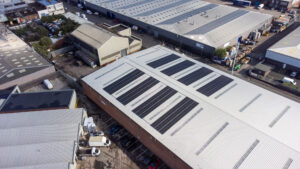
Last year, Brucom’s solar array, installed by Kembla, generated 184 Megawatt-hours of energy. With their new panels, they’re expected to push that number over 200 next year.
Now looking at residential, we spoke with Tim in Yoxall, on how are install is performing for him. Tim said:
“Since installing solar panels, not only are we charging our car for free, but we’re powering our house completely – that’s all the heating and hot water. We don’t actually pay anything for our bills. We’re with Octopus Energy; we bank money with them over the summer months when it’s really sunny, and then when we come into the colder winter months we are using some of that credit. We’re halfway through February, and we’ve still got quite a bit of credit left. We’ll use that up in the next couple of months or so, and when the sun starts to shine again in March and April we’ll start banking money again through the spring and summer.”
Own Your Energy Future
Looking to reduce your reliance on rising energy prices?
Get in touch with our team today:
📍 Midlands: 01543 713026
📍 South: 02392 400547
Or click “Get a Quote” to receive an instant estimate for your home or business.
Start Your Journey to Renewbles Today
Our mission is to lower your carbon footprint through a pain-free experience.
Get a quote

Green Loan Scheme for Staffordshire Businesses
Written by Daniel McMurray, Sales Manager If you run a business in...
Commercial Solar Power Installation for Manufacturing Businesses
Written by Billy Robertson, Commercial Manager Commercial solar power installation should no...

Solar Panel Cost in 2026: UK Prices, Grants & Savings
Written by Daniel McMurray, Sales Manager. Wondering what solar panel cost will...
Industrial Solar Panels for Industrial Estates
Industrial Solar Panels for Industrial Estates: Carports, EV Fleets & Microgrids Written...